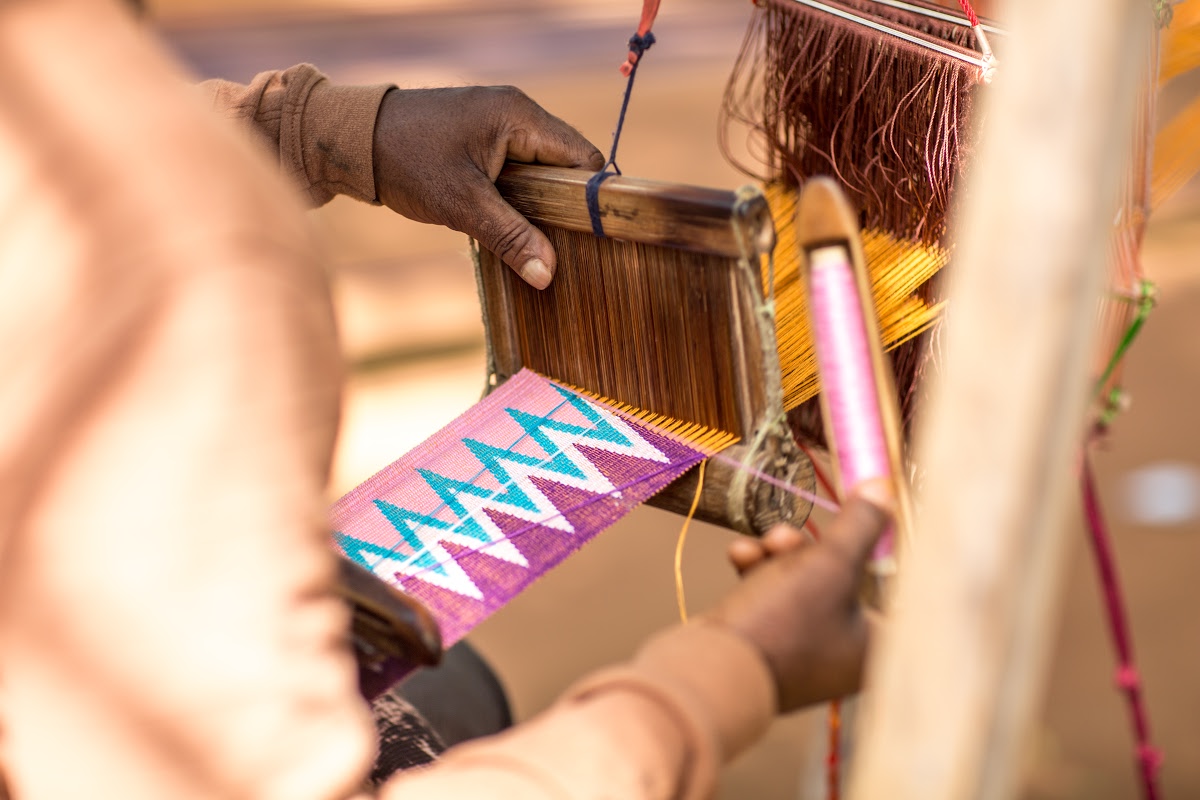
The Forgotten Crafts of Jigawa
In parts of Jigawa, where the land stretches wide and time seems to move with patience, there are stories that do not announce themselves. They exist in repetition. In hands that move without hesitation. In crafts that no longer ask to be seen.
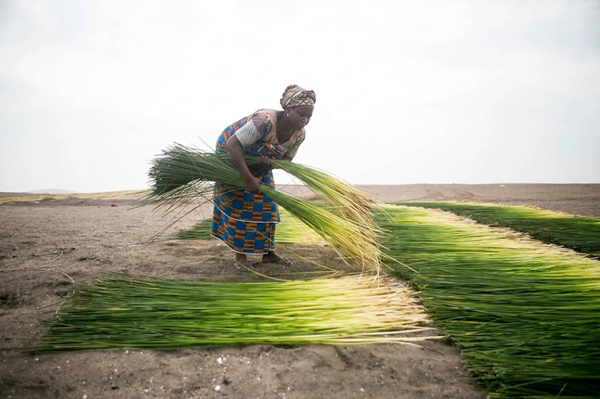
One of such is the practice of traditional fiber weaving — a craft once woven into the rhythm of everyday life. It begins not in workshops, but in the fields. Grasses are gathered under the sun, dried, sorted, and prepared. What looks ordinary to the untrained eye becomes, in the hands of the weaver, something deliberate.
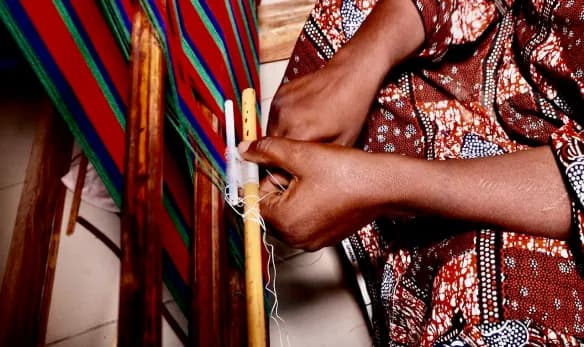
A woman sits just outside her home, legs folded, strands spread before her. There is no rush in her movement. Each fold, each pull, each tightening carries years of quiet mastery. She did not learn this from a classroom. She learned by watching. By staying close. By trying, failing, and trying again.
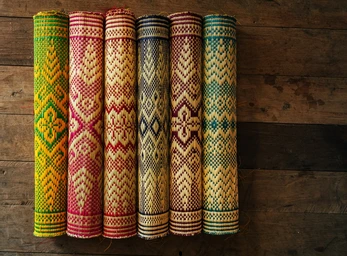
There was a time when this craft was everywhere. Mats lined homes. They hosted conversations, prayers, rest. They were present in moments both ordinary and significant. To own one was not just to have something functional — it was to be connected to a shared way of life.
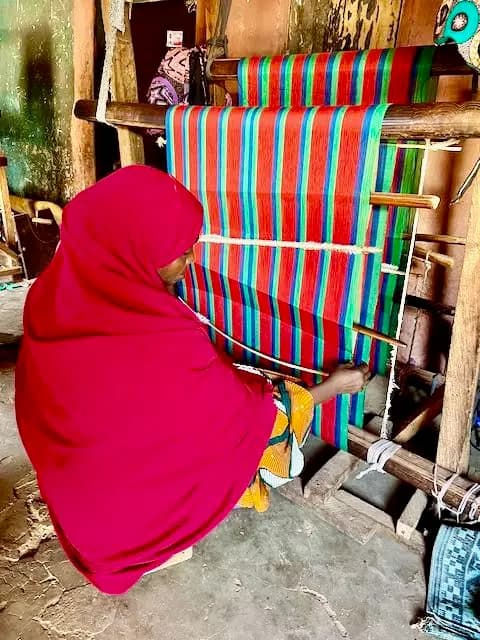
But that time is shifting. Markets now favor what is fast, what is cheap, what is easily replaced. Plastic has taken the place of patience. Convenience has outpaced tradition. And so, the craft begins to fade — not suddenly, but quietly.
Yet, not all has been lost. There are still those who continue — not out of obligation, but out of identity. For them, the craft is not a relic. It is memory made visible. It is proof that something once mattered and still does.
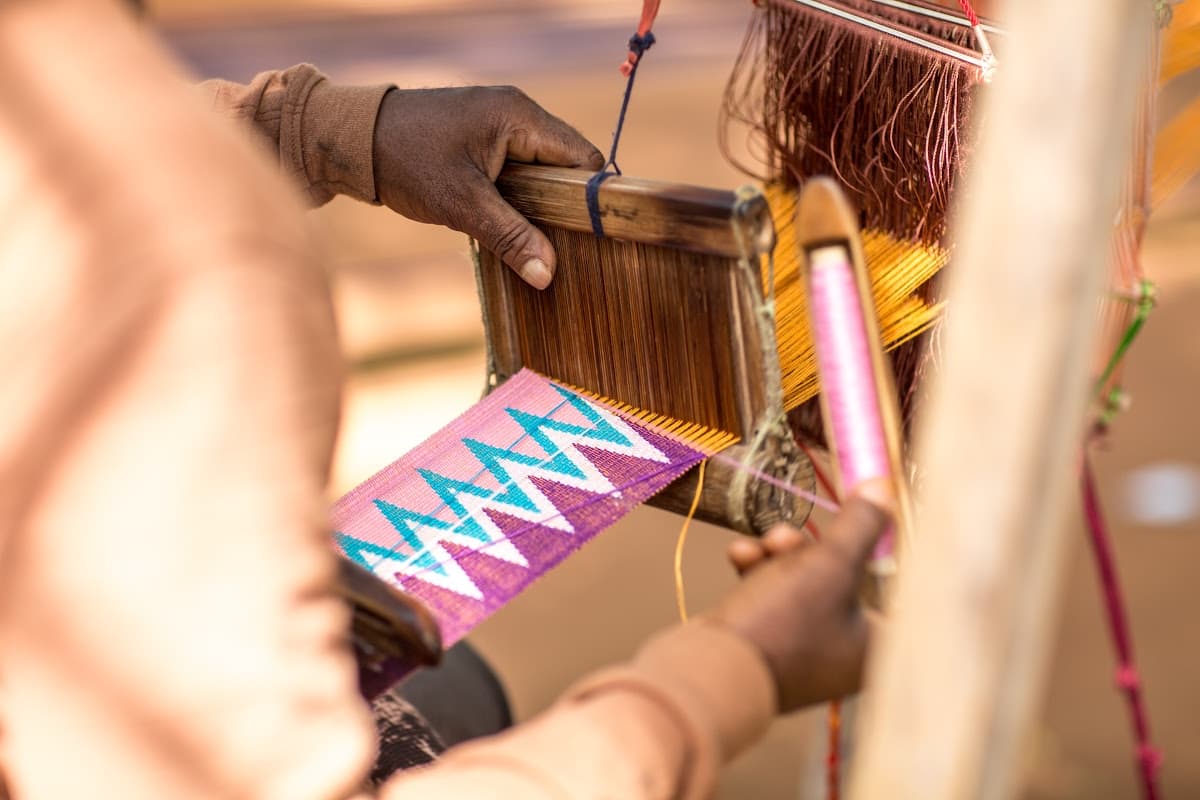
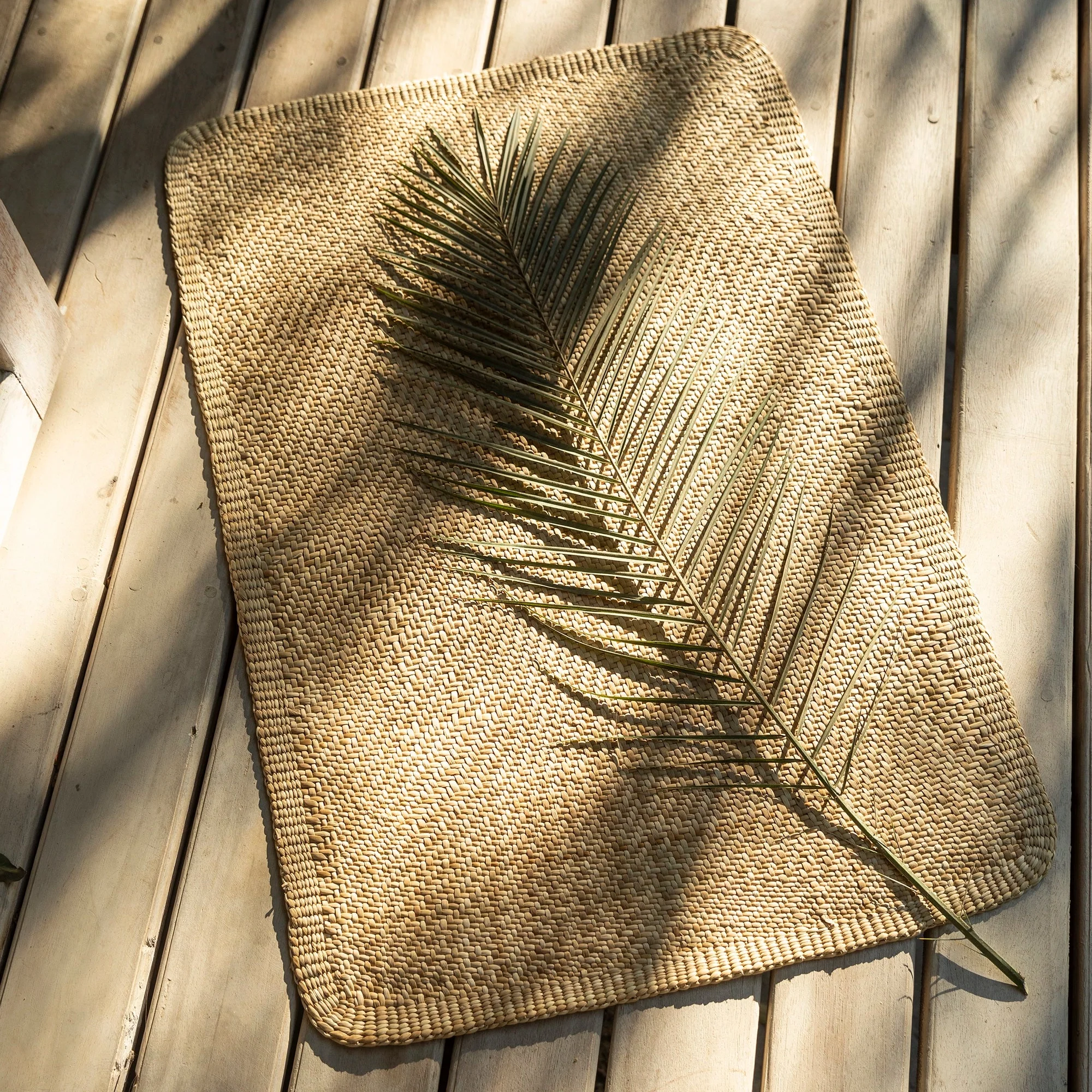
Then there is the legacy of the handwoven mats themselves. Long before modern furniture segmented our living spaces, the mat was a fluid, communal architecture. Unrolled in a shaded courtyard or a quiet room, it had the unique power to transform any open floor into a sanctuary. It was a space designed entirely without walls, where family hierarchies softened, where elders leaned back to share history, and where children gathered at twilight to listen to the enduring wisdom of stories passed down through generations.
The traditional mat served as the canvas for the daily rhythms of spiritual and social life. It hosted the quiet intensity of morning prayers, absorbing the weight of devotion, just as easily as it hosted the vibrant frequencies of afternoon conversations, trade negotiations, and neighborly check-ins. To spread a mat for a visitor was the ultimate gesture of authentic hospitality—an unspoken invitation that said, 'You are welcome here, sit and rest.' Each piece carried an organic warmth, an active connection to the very soil from which the grasses were harvested and woven.
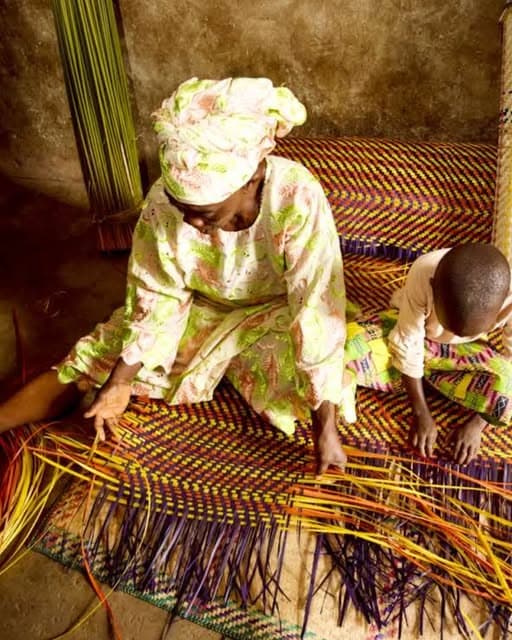
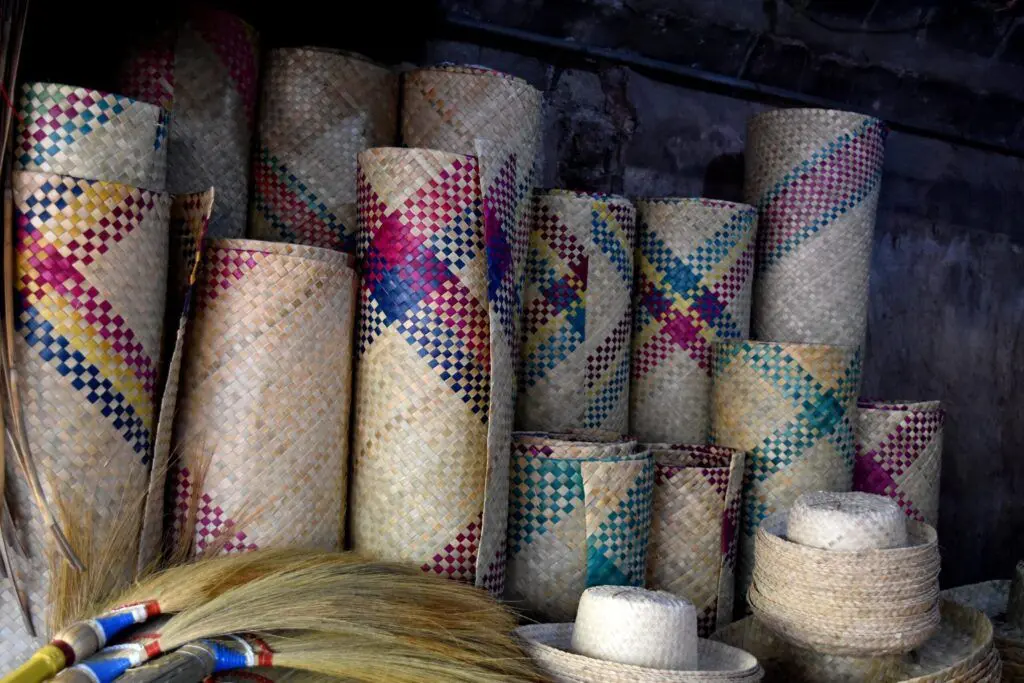
Today, the bustling local markets that once celebrated the earthly aroma of dried reeds are dominated by synthetic alternatives. Mass-produced in seconds and sold for a fraction of the cost, plastic mats have rapidly invaded these spaces. Modern life has little patience left for the slow, meditative labor of the hand-weaver. But when a handwoven mat is replaced by synthetic material, an entire library of indigenous knowledge is quietly erased. Each authentic mat is a woven archive—holding the precise calculation of mathematical symmetry, the generational secret of natural plant dyes, and the quiet dignity of a people who created profound meaning with their hands.
“What the world is slowly forgetting is exactly what once held it together. And in Jigawa, that truth is still being woven one strand at a time.”
Roots & Origins
Long before factory prints and imported goods filled local stalls, the people of Jigawa captured the essence of their identity through craft. Among these traditions was a practice as old as memory itself — handwoven mats and traditional fiber weaving, shaped entirely from raw, locally gathered savanna grasses and reeds. In communities across the region, weaving was a quiet, collective rhythm that moved seamlessly through daily life. Women gathered in shaded courtyards, their fingers working instinctively through strands of dried grass—twisting, folding, and tightening to transform the ordinary earth into something lasting. These mats were woven with deep intention, built to host the sacred and mundane moments of homes, ceremonies, prayers, and rest.
Today, however, that ancient rhythm is breaking. Mass-produced plastic mats — cheaper to buy and faster to manufacture — have aggressively replaced these handmade masterpieces. Modern life has little patience left for slow, meditative creation, and younger generations are increasingly drawn away to cities, chasing a future that feels completely detached from the quiet mastery of the past.
Cultural Significance
To view these handwoven mats as mere utilitarian objects is to miss their true purpose entirely; they are living, breathing archives. Each natural strand holds time invested without urgency, intricate mathematical knowledge passed down without formal documentation, and a rich northern culture preserved without loud announcement. They stand as the physical memory of a people who chose to create profound meaning directly with their hands.
Even now, in the quiet corners of Jigawa, there are still those who refuse to let the craft vanish — continuing not for commercial profit, but because the fiber is woven into who they are. They weave patiently between daily responsibilities, teach whenever a younger soul is willing to learn, and create even when the modern world is no longer watching. Their quiet labor may be silent, but it remains a powerful, monumental act of cultural resilience.
Quick Facts
Region
Jigawa, Nigeria
Category
Weaving
Production Timeline
Production: 1–3 weeks per mat
Traditional Tools
- Locally gathered grasses
- Dried reeds
- Natural dyes
- Weaving frames
Are you an artisan or heritage advocate?
Want to preserve a traditional craft?

Mujaheed Nuhu
Curator
“A proud contributor documenting this heritage.”
Submitted 9/26/2026
Visual Legacy

Ratings & Reviews
Community feedback from travelers and explorers.