Traditional Leathercraft of Katsina
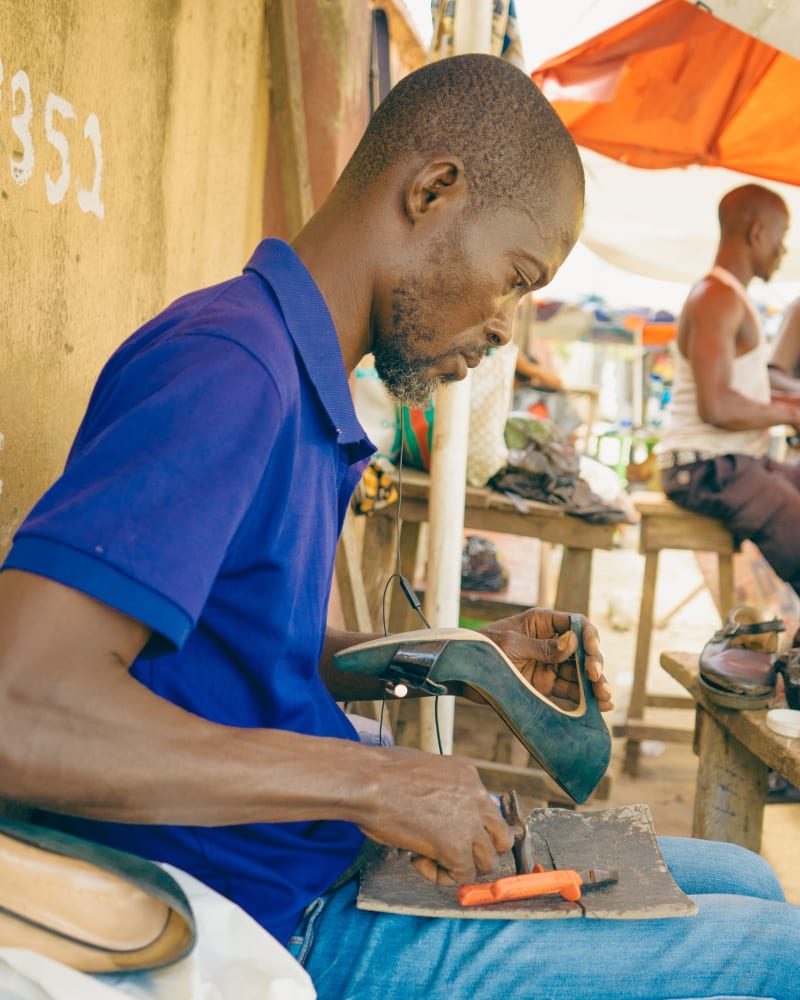
By the time Katsina begins to wake, Malam Sani Lawal is already seated in his small workshop, leather spread before him, his tools arranged within reach. His hands move with the quiet certainty of someone who has done the same work for more than three decades. He learned the craft of making traditional Hausa leather sandals from his father when he was twelve, first by watching, then by helping, and eventually by mastering the skill himself. For him, each cut, stitch, and measured piece of leather carries more than craftsmanship; it carries inheritance. 'It is part of what my father left me,' he says. 'If I stop doing it, what he taught me stops with me.'
Outside his workshop, however, the world is changing rapidly. Many young people are choosing modern pursuits over the slow, patient discipline of artisanal labor. At the same time, cheap, factory-made synthetic footwear has flooded local markets, making it easier to replace authentic handmade pieces with disposable alternatives. Yet Malam Sani continues each dawn, because some traditions are not kept alive by commercial demand alone; sometimes they survive simply because someone refuses to let them disappear.
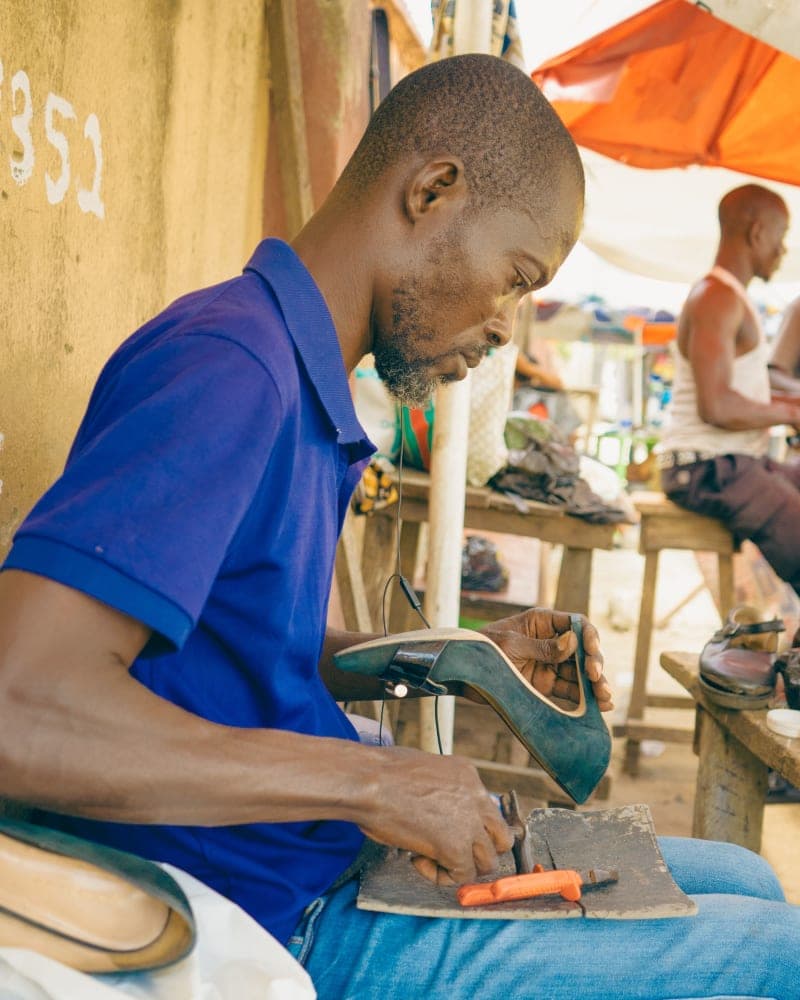
Perhaps this is how heritage truly vanishes—not in a single catastrophic moment, but quietly, when one generation stops teaching and another stops asking to learn. Northern Nigeria's history is not found only in ancient monuments, royal palaces, or festival durbars; it also lives in modest workshops, bustled dye pits, family courtyards, and the calloused hands of ordinary people who carry knowledge inherited from those before them.
Malam Sani may never call himself a keeper of history, but every pair of sandals that leaves his workshop carries a small piece of the past into the present. His work serves as a living reminder that progress should never require forgetting, and that preserving where we come from does not always mean standing still. Sometimes, it simply means remembering what is worth carrying forward. As he bends over another cut of leather, his hands continue their familiar rhythm—quietly, patiently, faithfully. For now, they still remember.
“A fading tradition we must protect.”
Roots & Origins
For centuries, Katsina was renowned across trans-Saharan trade corridors as a premier center of indigenous tanning and leather artistry. Hausa leatherworkers (Masu sana'ar fata) supplied royals, horsemen, and everyday citizens with durable, exquisitely finished footwear (takalma), pouches, and saddles. Knowledge of hide selection, natural vegetable tanning, precise skiving, and stitch-binding was passed strictly through familial guilds from father to son.
In recent decades, the emergence of mass-produced plastics, imported rubber slip-ons, and synthetic materials drastically shrank the artisan market. With apprenticeship pipelines drying up as younger generations seek faster urban livelihoods, the ancestral art of hand-stitching custom leather sandals has been pushed into a precarious, endangered state.
Cultural Significance
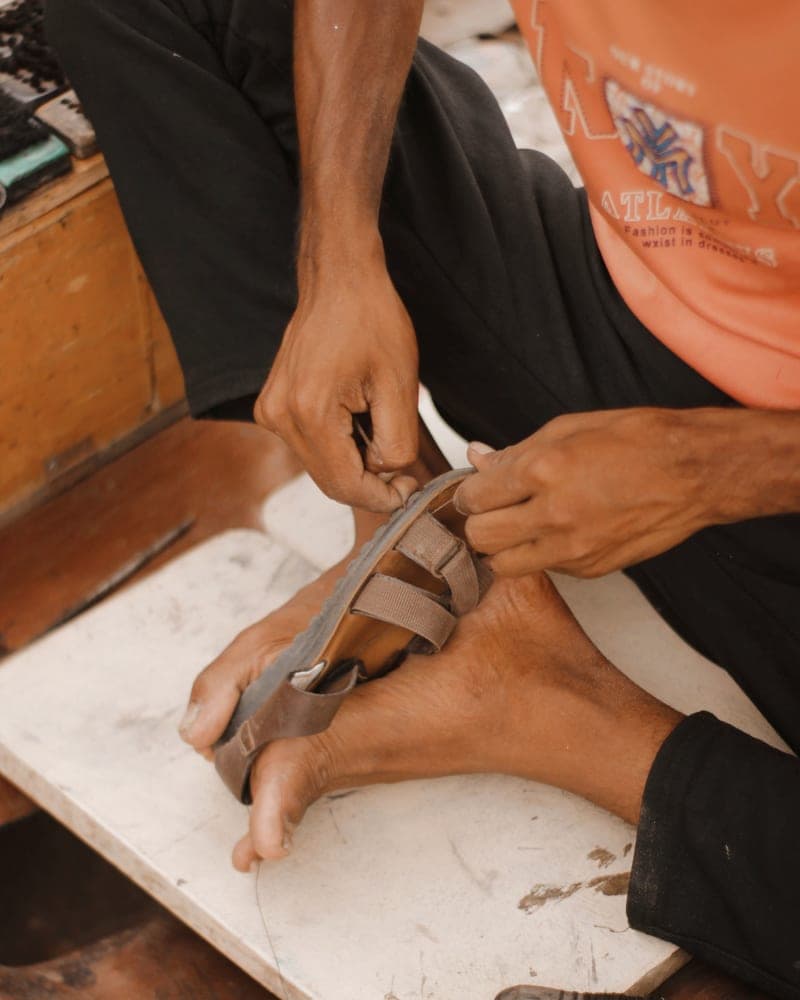
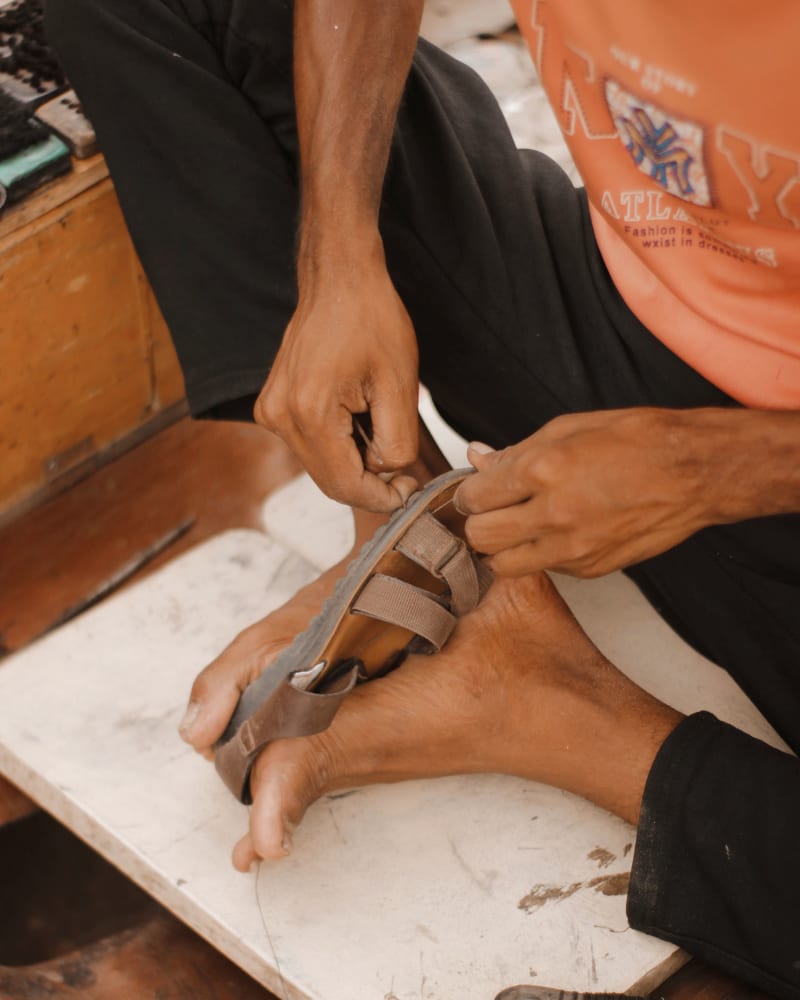
Handmade leather sandals are far more than utilitarian footwear; they are tactile relics of indigenous engineering and cultural memory. Each hide selected, softened, and hand-stitched embodies an unbroken chain of generational knowledge that requires zero industrial machinery—only patience, spatial precision, and ancestral pride.
Artisans like Malam Sani Lawal act as living cultural repositories. By maintaining his workshop day after day, he preserves the tactile vocabulary of Northern Nigerian craftsmanship, proving that true value lies in items crafted with enduring soul rather than fleeting convenience.
Quick Facts
Region
Katsina, Nigeria
Category
Heritage Craft
Production Timeline
Production: 2–4 days per pair
Traditional Tools
- Locally tanned cow and goat hides
- Leather trimming knives (Wuka)
- Heavy stitching awls (Kaimi)
- Waxed thread & leather cords
- Wooden lasts and shaping blocks
- Traditional burnishing stones
Are you an artisan or heritage advocate?
Want to preserve a traditional craft?

Mujaheed Nuhu
Curator
“A proud contributor documenting this heritage.”
Submitted 10/11/2026
Visual Legacy
Ratings & Reviews
Community feedback from travelers and explorers.