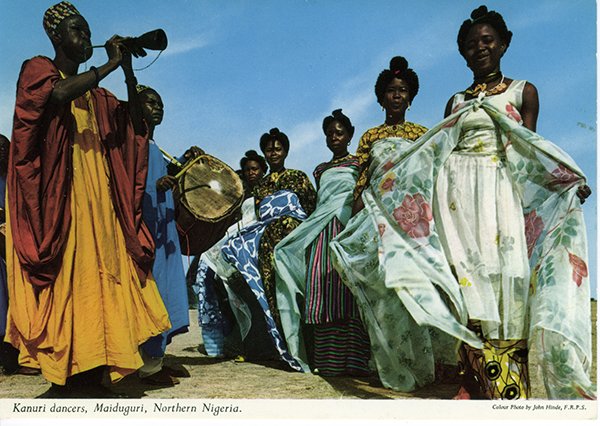
Kanuri

About the Language
Kanuri is a remarkable Nilo-Saharan language that serves as the linguistic legacy of one of Africa's greatest pre-colonial states: the Kanem-Bornu Empire. This empire dominated the Lake Chad basin for over a millennium, and the Kanuri language carries the aristocratic and intellectual weight of that profound history.
Spoken predominantly in Borno and Yobe states, Kanuri culture is synonymous with deep-rooted Islamic scholarship. For centuries, scholars from the Borno empire traveled as far as Cairo and Mecca, establishing the language as a medium of academic and religious prestige. The linguistic structure of Kanuri is unique, lacking gender pronouns but utilizing a complex tonal system that requires precise inflection to convey accurate meaning.
Culturally, Kanuri is a language of elegance and intricate diplomacy. It is spoken during the grand durbars of the Shehu of Borno, woven into the lyrics of traditional Kanuri lute (Ganga) music, and used to narrate the legendary tales of ancient cavalries that once ruled the expansive sands of the Sahel.
History & Origins
Kanuri is historically associated with the mighty Kanem-Bornu Empire, which dominated the Lake Chad region for centuries.
Cultural Significance
The language carries the history of Islamic scholarship, complex diplomatic structures, and trans-Saharan trade.
Common Phrases
Nda wuye
How are you?
Kele
Good / Fine
Lale
Welcome